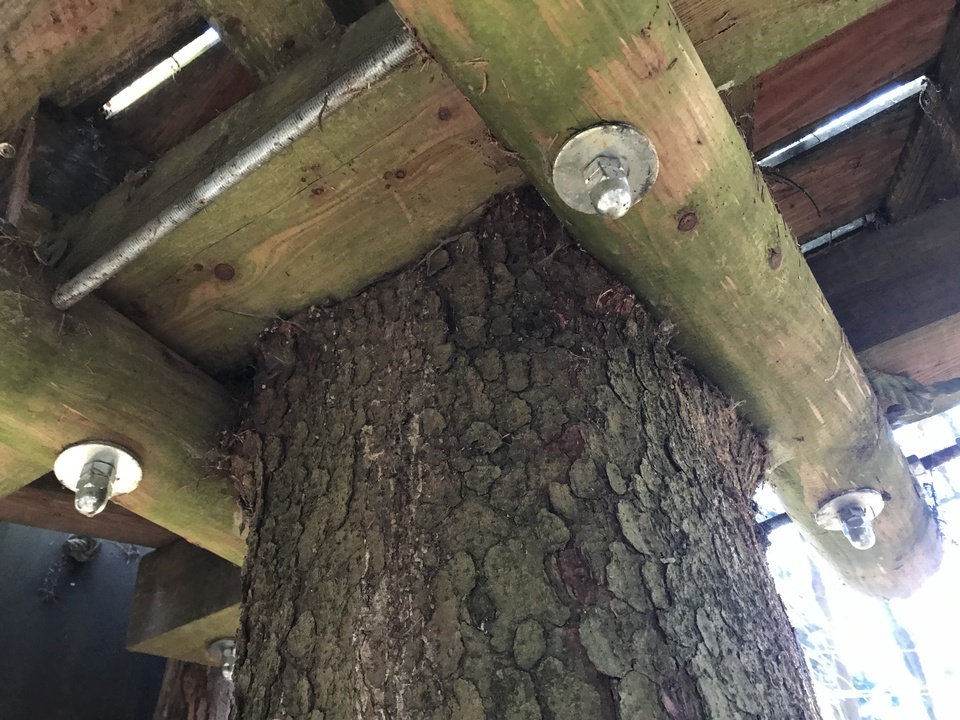
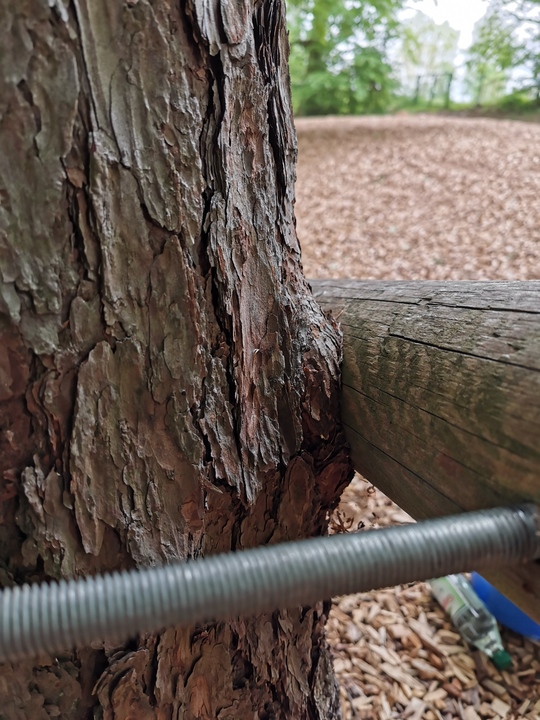
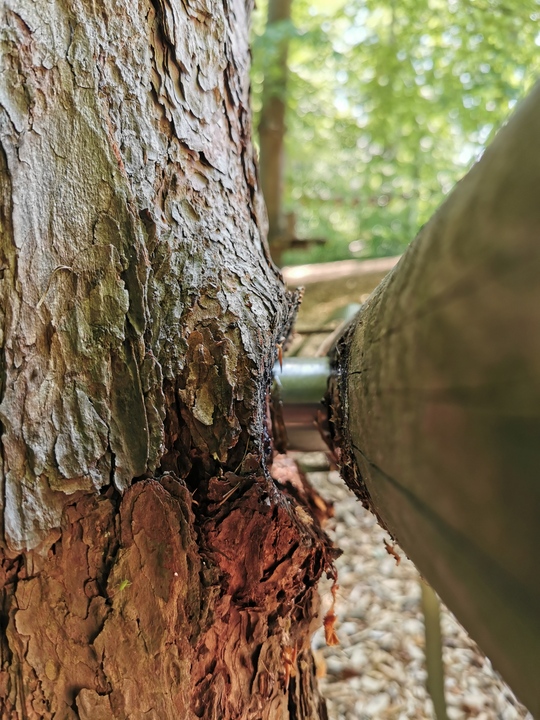
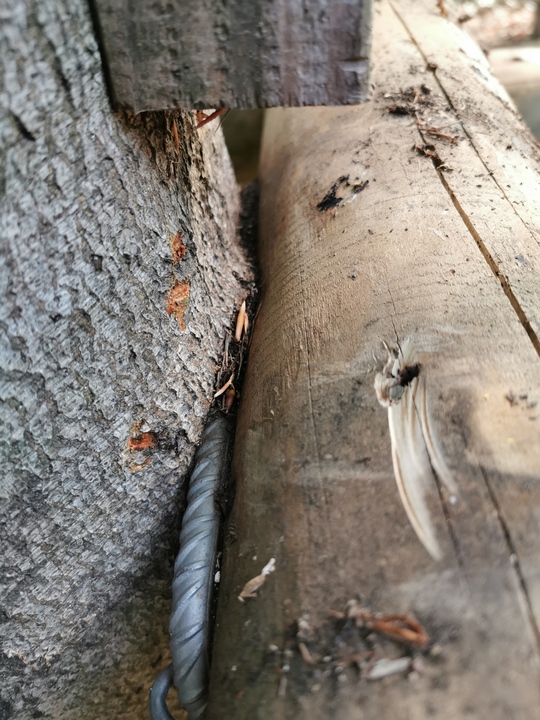
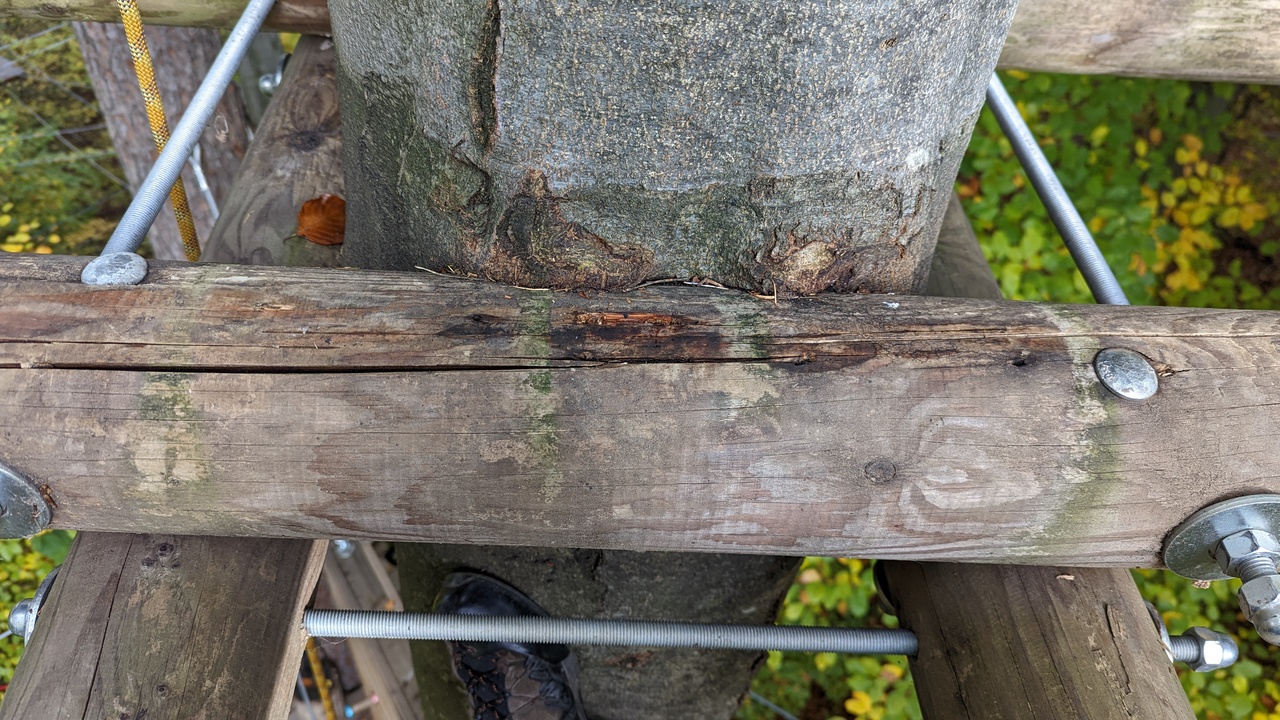
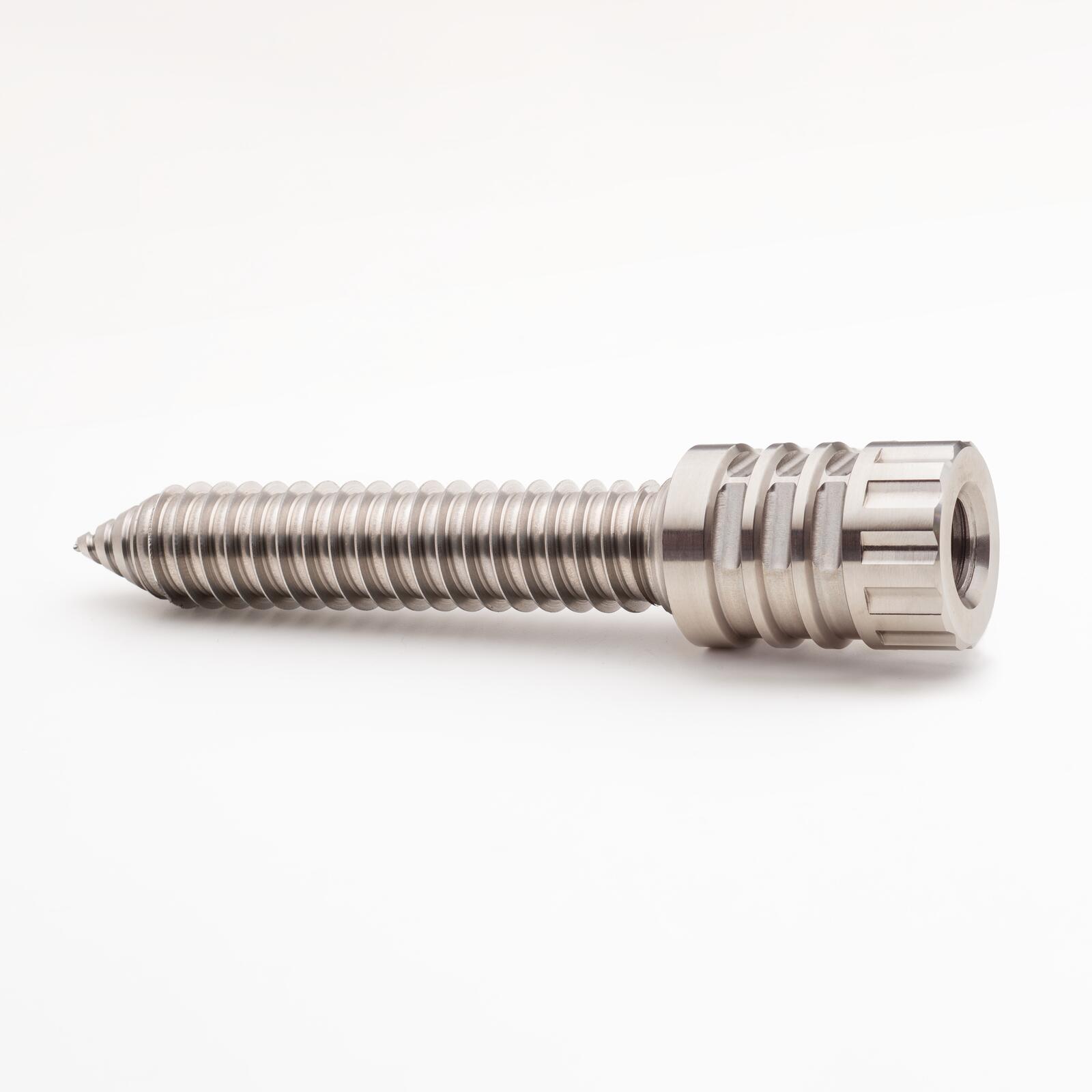
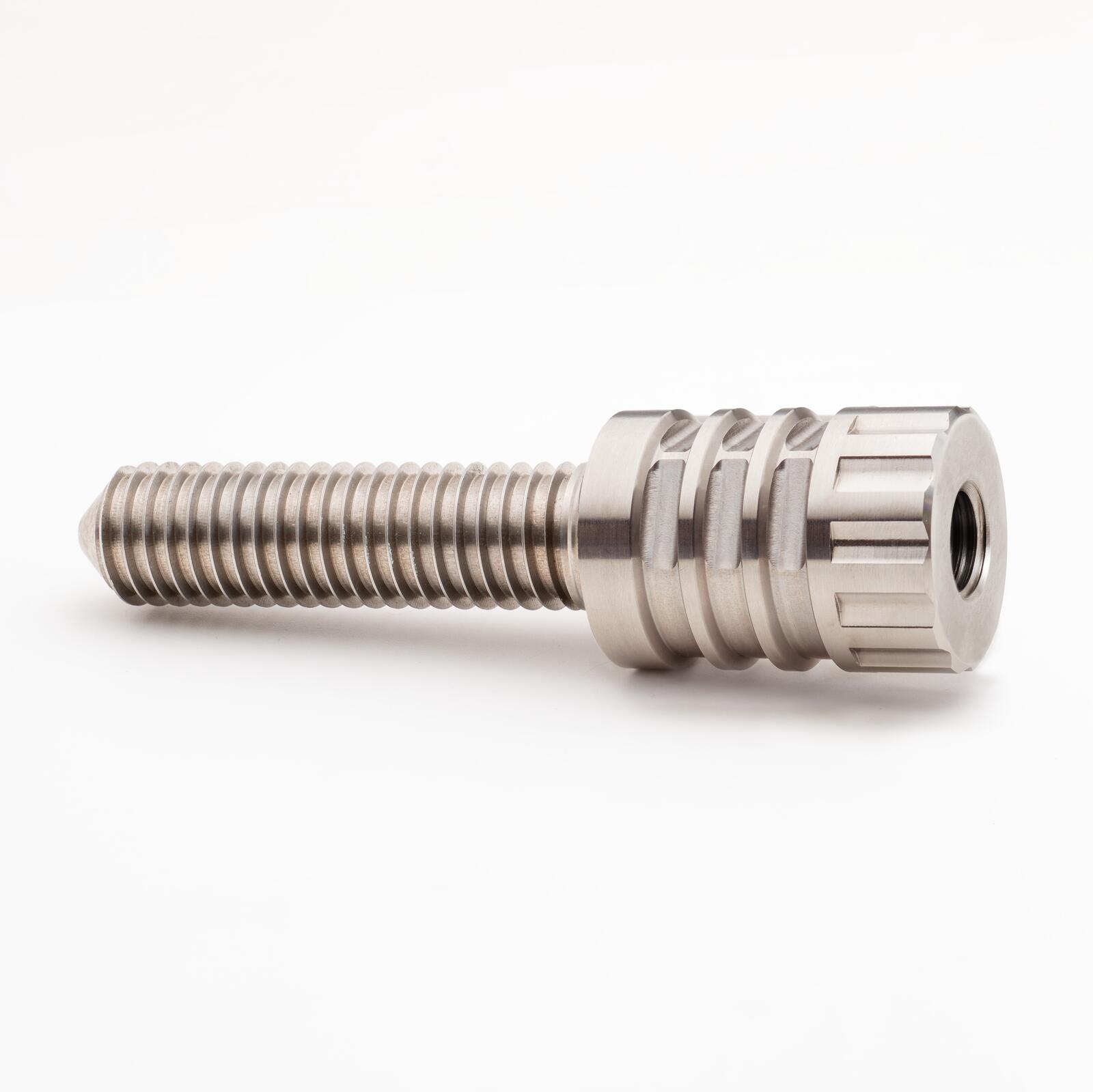
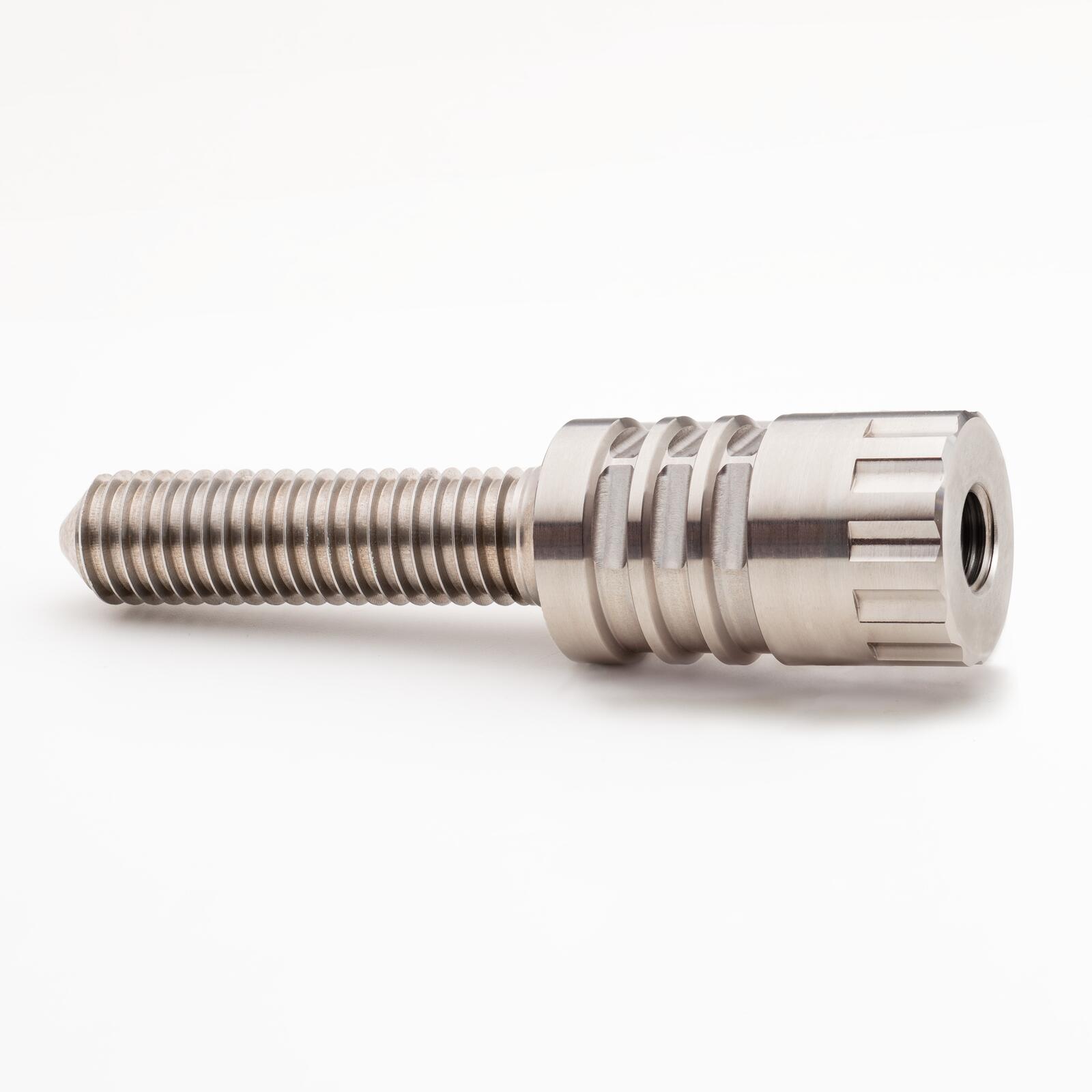
Admittedly, there is no such thing as THE perfect fastening technique when it comes to course construction. Every technique has its clear advantages and disadvantages and thus influences the natural growth process of the tree population concerned. A combination of different fastening techniques is often the best solution for both the tree and the operator.
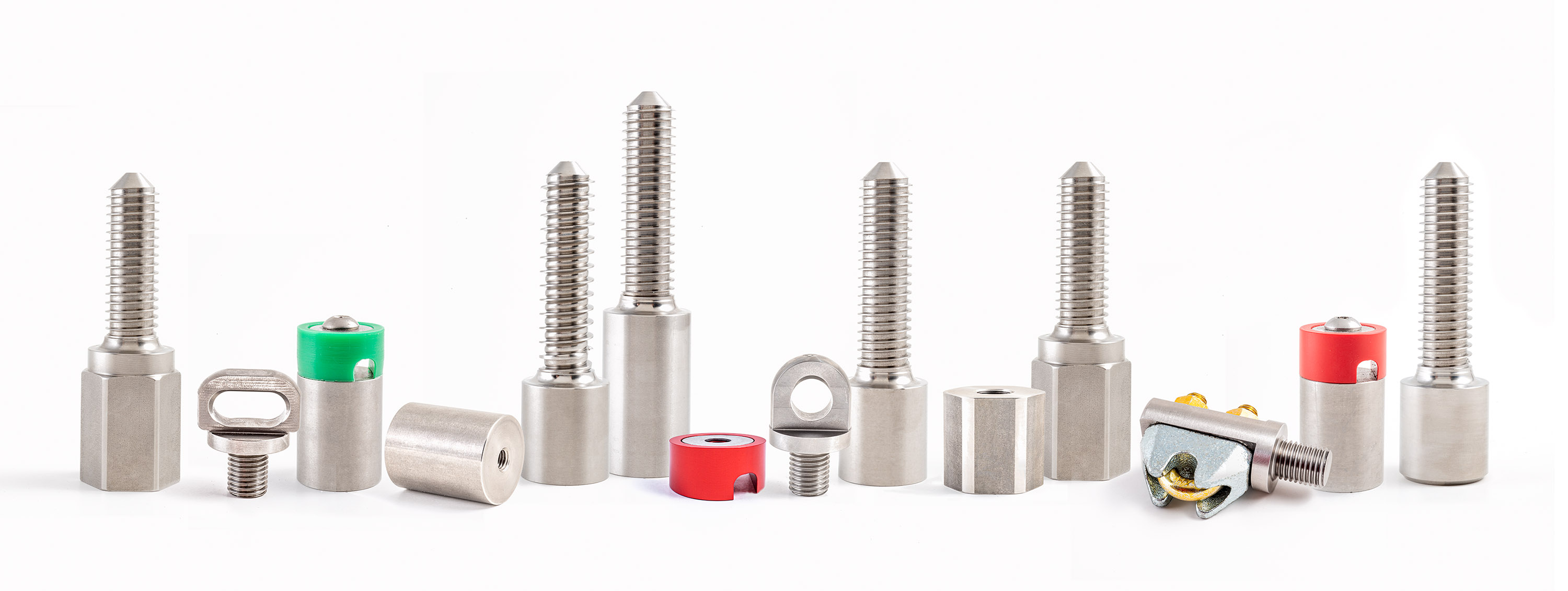
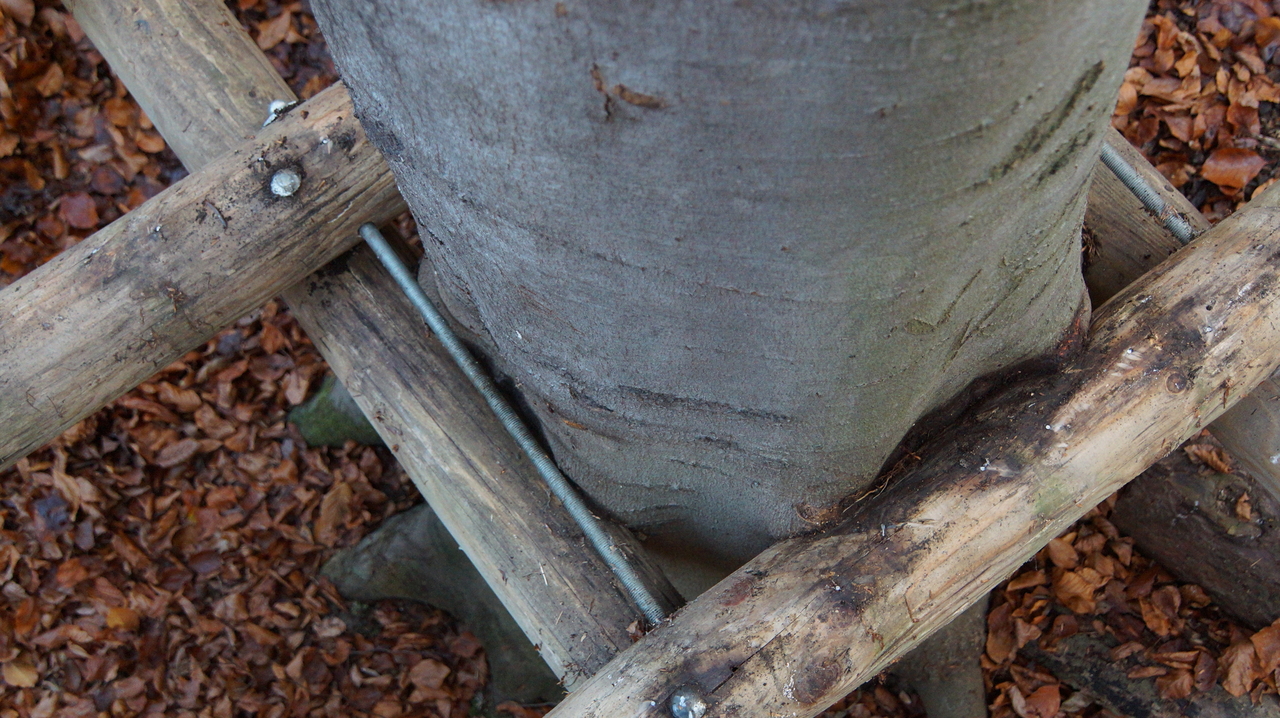
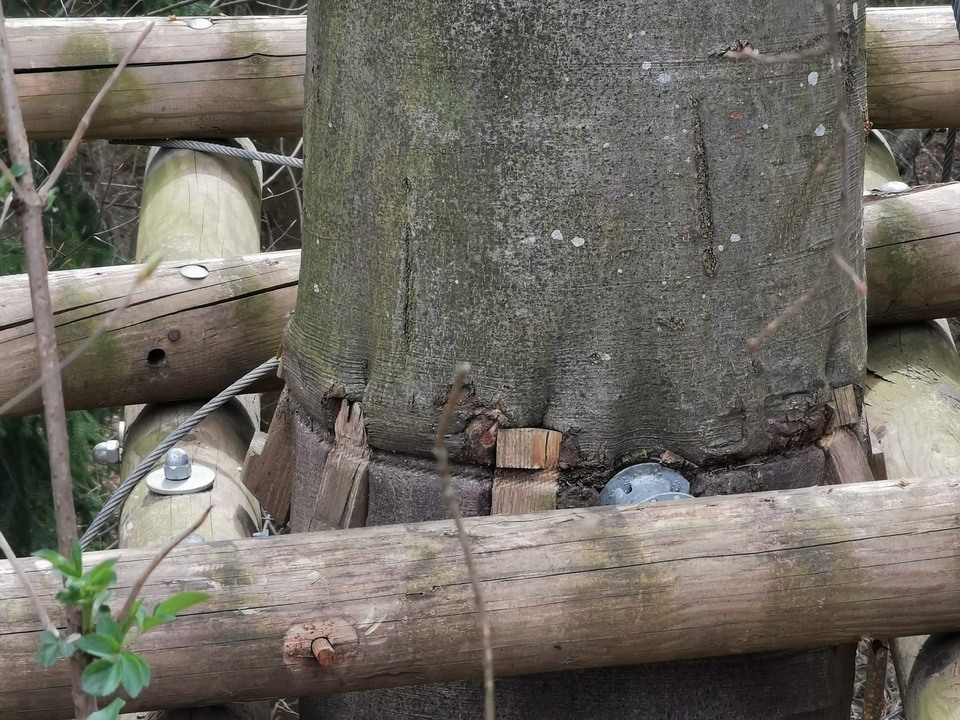
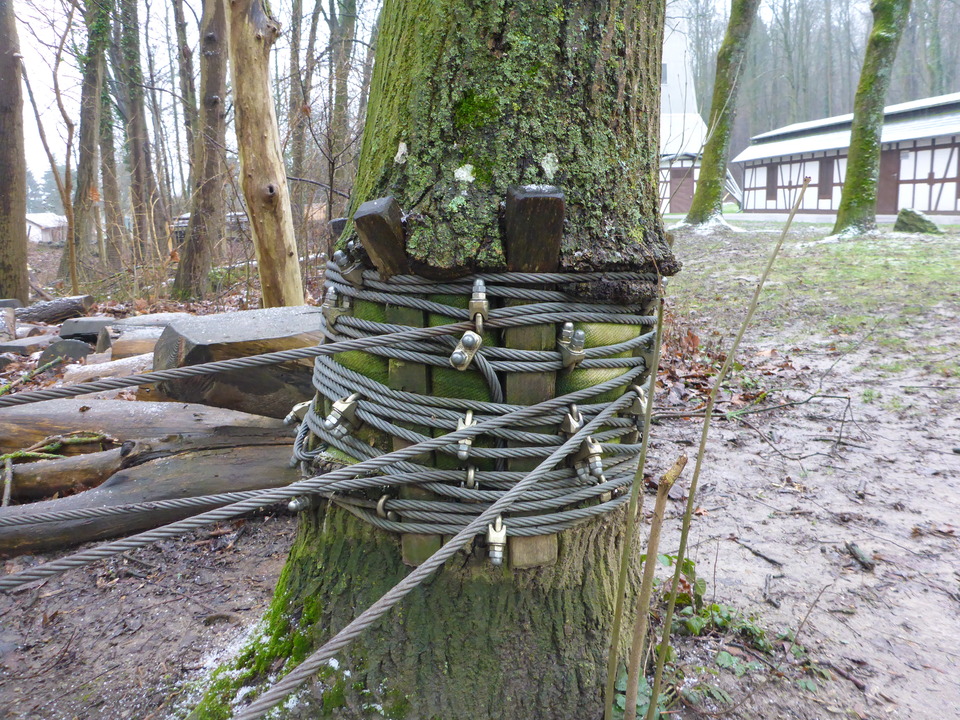
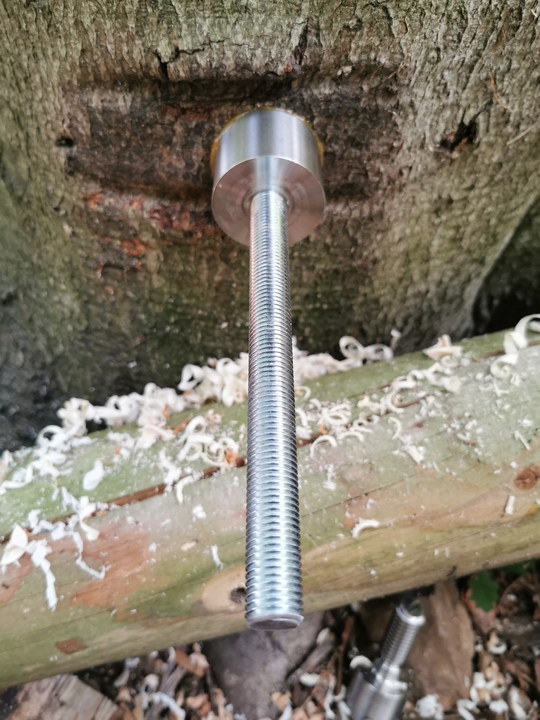
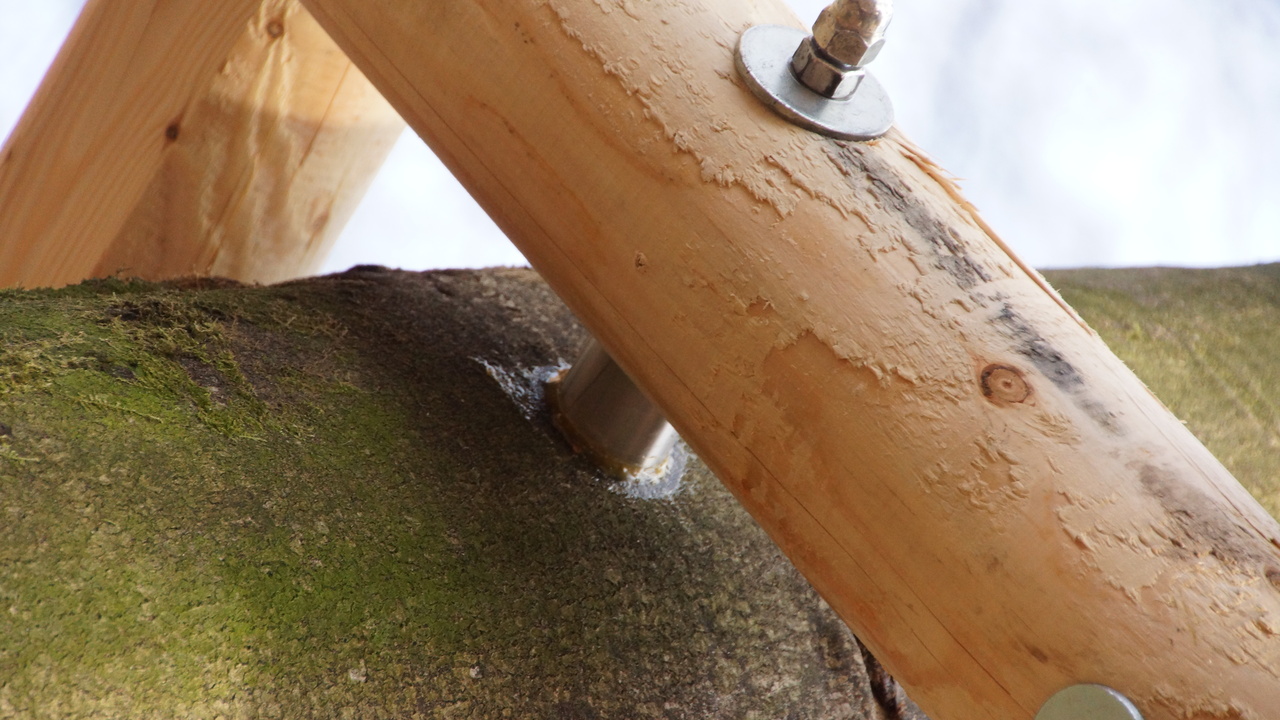
Until now, the state of the art has been wrapping and clamping methods, which only give the appearance of not damaging the tree. However, the risk of large-scale constriction can only be limited by immense maintenance efforts. We now know that a healthy tree primarily needs sufficient space to continue growing in order to remain healthy. Over the course of its life, the tree has learned to cope with small wounds, such as those caused by branch growth. When the bolts are drilled in, the tree suffers comparatively minor injuries that it can easily compensate for, so that neither its health nor its growth is impaired.
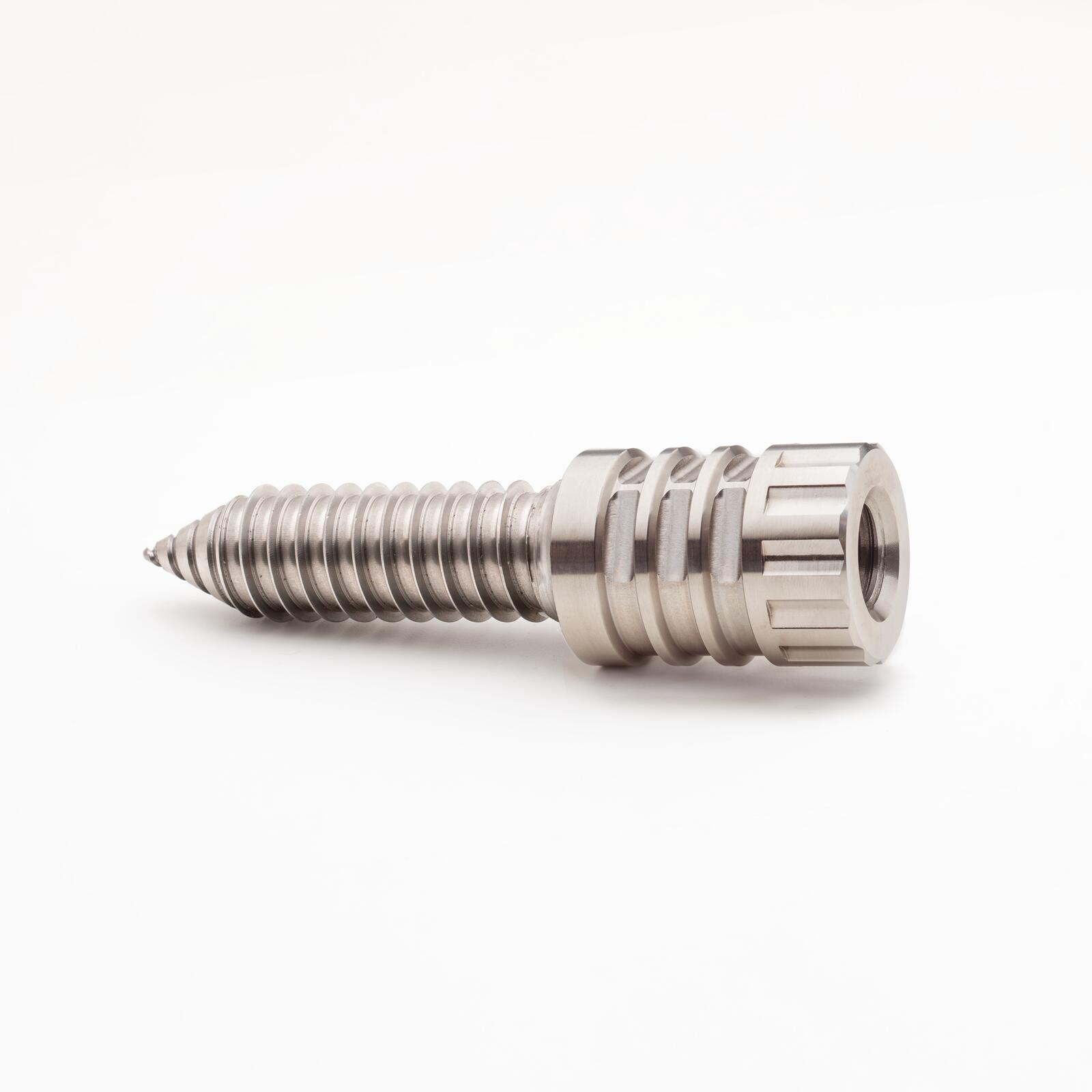
Tree bolts are therefore not only more sustainable and safer, but above all gentler on the tree. Since trees have the ability to grow continuously, they strive to integrate everything that stands in their way. They make it their own. The air embolism caused by the drilling is immediately closed again by screwing the disinfected screw into the tree. The screw is assimilated and thus becomes an integral part of the tree.